
Most homes fill up with smart devices one at a time. A video doorbell here, a smart speaker there, a lighting app on your phone, each with its own controls and quirks. Whole home automation takes a different path, bringing those systems together so they work as one instead of a pile of separate gadgets. What you get is a home that feels simpler to live in, not more complicated.
Here is how integrated control changes daily life and what sets it apart from piecing devices together yourself.
From a Pile of Devices to One System
Owning a stack of smart devices is not the same as having a smart home.
When every device has its own app and its own remote, you end up managing technology instead of enjoying it. One app dims the lights, another runs the music, a third handles the cameras, and none of them talk to each other. The promise of a smart home quietly becomes a chore.
Integrated home automation solves that by bringing your systems under one roof. Lighting, audio, video, shades, and security stop being separate islands and start working together as a single, coordinated system you actually control from one place.
Bringing Your Systems Together
The point of integration is coordination, not just consolidation.
A unified system connects the pieces of your home so they respond together, so you manage the home as a whole rather than each part on its own. The systems that typically come together include:
- Lighting throughout the house and grounds
- Audio in individual rooms or across the whole home
- Video and entertainment in living spaces
- Motorized shades on windows around the home
- Security and cameras at entry points and around the property
Once these connect, the home can respond to a single instruction rather than a dozen separate ones. That coordination is the heart of what makes automation feel effortless.
Scenes and Routines That Do the Work
Scenes are where automation stops being a novelty and starts saving you effort.
A scene is a saved setting that handles several actions at once, so one command sets them all together rather than adjusting each system by hand. A few examples show how this plays out:
- A morning routine that raises the shades, brings up gentle lighting, and starts music
- An evening scene that dims the lighting control, lowers the shades, and cues your home audio
- A leaving routine that turns off the lights, lowers the shades, and arms security
- A movie setting that dims the room and sets the entertainment in one step
Routines can also run on a schedule, handling everyday adjustments on their own. The home does what it should at the right moments, and you stop thinking about the small stuff.
One Interface for Everything
The real magic is reaching everything from a single, simple point of control.
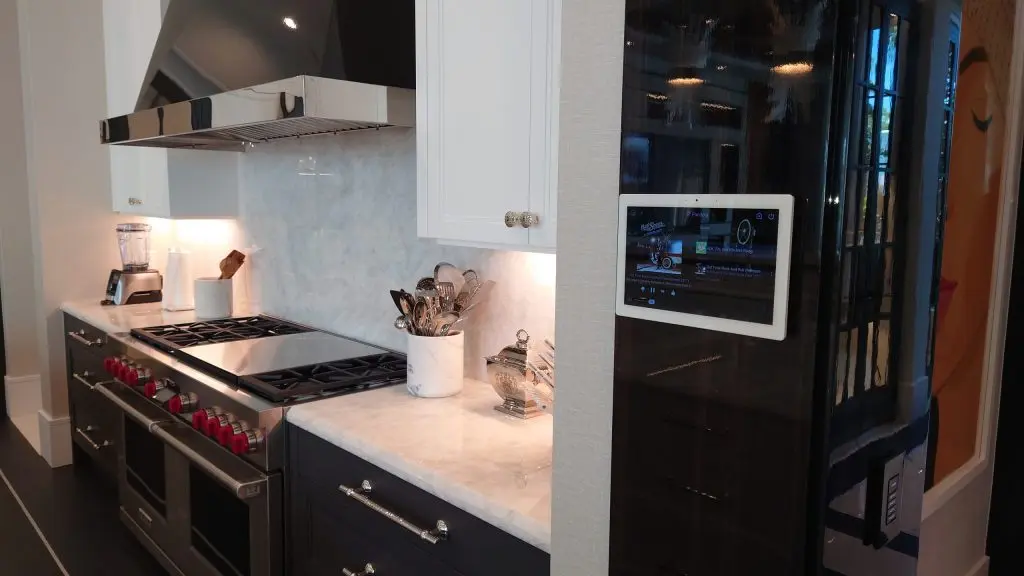
Instead of juggling apps and remotes, a unified system gives you one way to control it all, wherever it makes sense: a wall-mounted touch panel in main rooms, your phone from anywhere, or a simple keypad by the door. Platforms like Control4 or Crestron tie everything into one interface, so the whole home answers to the same familiar controls.
This is where a connected home finally feels simple. One tap replaces a drawer full of remotes and a phone full of apps, and everything responds the way you expect it to.
Control Any Family Member Can Use
A system means little if people find it hard to use.
The finest automation in the world fails if only one person in the house knows how to work it. Good design puts the everyday controls where people expect them and keeps them clear enough that anyone can pick them up. Guests should manage the basics without a tutorial, and every family member should feel at home with the system.
This ease of use does not happen by accident. It comes from designing the controls around how your household lives, so the common actions are the obvious ones.
Piecemeal Products Versus a Designed System
There is a real gap between assembling smart products and having a system designed as one.
Buying individual smart products is easy, but stitching them into something that works together is where it falls apart. Devices from different makers often do not cooperate, apps multiply, and the experience stays fragmented no matter how much you add. A professionally designed system plans the whole thing to work together from the start, so your lighting, audio, surveillance, and shades all answer to the same controls.
The difference shows up every day:
- One coordinated system instead of a dozen disconnected apps
- Controls that work together rather than competing
- Reliable performance planned around your home
- A setup any family member can actually use
Planning and Reliability
A system you rely on every day has to be planned and built to last.
Thoughtful planning is what separates a home that works from one that frustrates. The design starts with how you live, which systems matter most, and how you want to control them. Our design and engineering services take on that planning, so the finished system fits your home rather than forcing you to adapt to it.
Reliability matters just as much. A system that hesitates or drops out is worse than no automation at all, since you stop trusting it. Building it right, with quality equipment and proper setup, keeps a system dependable day after day.
Room to Grow
Homes and technology both change, and a good system is ready for it.
You might start with lighting and audio, then add shades, cameras, or more rooms over time. A system designed with growth in mind takes those additions in stride, building on what is already there rather than starting over. Planning ahead during the initial design keeps the system ready for whatever you add next.
AudioTec Designs has designed integrated home systems since 1989. We plan automation around how your household lives, bring your systems under one simple form of control, and build it to stay reliable as your home grows.
Contact us to start planning your home automation. We will study how your household lives, learn how you want things to work, and design a system that makes everyday living simpler.
Frequently Asked Questions
What is whole-home automation?
Whole home automation brings your separate systems, such as lighting, audio, video, shades, and security, under one integrated control platform. Instead of managing each with its own app, you control the home as a single coordinated system through a touch panel, phone, or keypad.
How are scenes different from regular smart devices?
A scene handles several actions at once with a single command. Rather than adjusting lights, shades, and audio separately, one tap sets them all together. This is what separates a truly integrated system from a collection of individual smart products that each work on their own.
Can everyone in my family use the system?
That is a core goal of good design. A well-planned system puts everyday controls where people expect them and keeps them simple enough that anyone can use them, guests included. We design the controls around how your household lives so the system feels natural to everyone.
How is this different from buying smart products myself?
Individual smart products are easy to buy but hard to make work together, since devices from different makers often do not cooperate. A professionally designed system plans everything to work as one from the start, giving you a single coordinated experience instead of a pile of separate apps.
Can I add more to the system later?
Yes. A system designed with growth in mind lets you add rooms, systems, or devices over time, building on what is already there. Planning for the future during the initial design keeps things ready for whatever you decide to add down the road.