
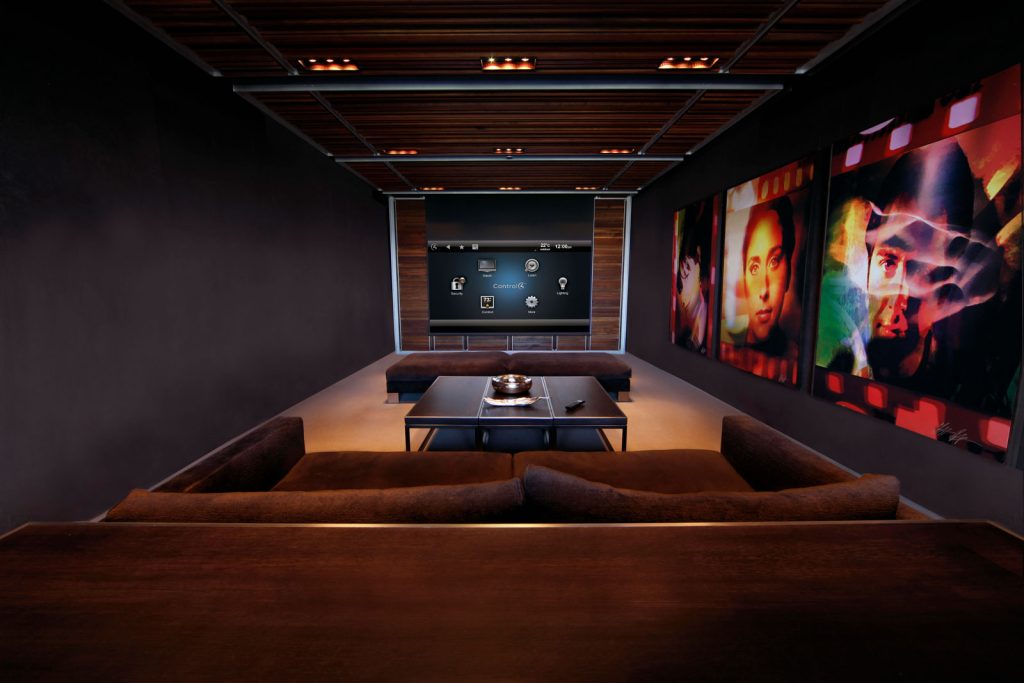
Many people believe that top-notch sound quality in their home theater in Boca Raton simply requires expensive audio equipment, but the real key is in the acoustic design of your home theater. Understanding your room’s unique sound characteristics—its size, shape, and the materials used—plays a crucial role in delivering a truly immersive experience.
To optimize your home theater’s acoustic design, focus on key elements such as strategic speaker placement, using sound absorption materials like acoustic panels, and ensuring that at least 50% of the room’s surface is treated with sound-absorbing materials to prevent echoes. Additionally, consider configuring your seating arrangement and employing diffusers at first reflection points to create a more immersive audio experience.
Assessing Your Room's Acoustics
The first step in assessing your room’s acoustics begins with consideration of its dimensions and shape. Larger rectangular spaces tend to provide optimal sound distribution. However, if you’re working within a smaller or irregularly shaped room, don’t worry—these environments can still be transformed into acoustic-friendly spaces.
By observing how sound moves through the room, you’ll begin to understand where adjustments may need to be made for an optimal audio experience.
Recognizing the importance of these observations leads us to an effective method for assessing sound behavior.
Conducting a Clap Test
One effective and straightforward technique is the clap test. Stand in various positions throughout the room and clap your hands together loudly. Pay close attention to any echoes or lingering sounds; the areas where you hear prolonged reverberations indicate spots that may require acoustic treatment.
These echo points reveal how sound waves bounce off walls and interact with furniture, illustrating where sound can muddle or distort—particularly critical during movie viewing or immersive gaming experiences.
Having identified problematic areas through auditory assessments, it’s time to explore measurements that will provide further insights.
Utilizing Room Measurement Tools
For those who want more precise data, utilizing software like Room EQ Wizard combined with a calibrated microphone will open up a new layer of understanding about your space’s acoustics. When set up properly, this tool can measure frequency response and determine nuances such as reverberation times, which are crucial for diagnosing specific acoustic issues like standing waves or flutter echoes.
This detailed analysis helps you pinpoint precisely where adjustments should focus, making it easier to develop an effective treatment strategy.
By measuring frequency response across multiple points in the room, you gain invaluable insights that go beyond simple subjective evaluations. You’re able to see how sounds at different frequencies behave in various locations, helping debug problems that could disrupt your listening pleasure.
With all this gathered information, you’ll be ready to implement strategies that enhance audio fidelity and immersion in your home theater setup.
Strategic Speaker Placement
Achieving optimal sound in your home theater is akin to crafting a masterpiece—a well-thought-out arrangement can dramatically enhance your audio experience. The key to effective speaker placement lies in understanding how sound waves interact with the space around them. By placing speakers thoughtfully, you can create an immersive environment that allows viewers to feel as though they are part of the action unfolding on screen.
Optimal Speaker Setup for 5.1 Surround Sound
For a 5.1 surround sound system, the configuration begins with the center channel speaker, which should be situated directly below or above your screen, ideally aligned with ear level when seated. This position ensures that dialogue remains clear and anchored to the image on screen. Flanking the center speaker, the front left and right speakers should be positioned at an angle of 22-30 degrees from your primary listening position. This angling helps to create a natural soundstage, enabling auditory cues to emanate correctly and providing a more realistic experience.
As we explore further into the setup, attention must also be given to rear speaker placement.
Rear speakers are essential for delivering depth to soundscapes; they should ideally be placed just above ear level behind the listener. This height allows for sound effects to come alive from behind without overwhelming the primary conversation happening in front.
Additionally, when considering subwoofer placement, it is advantageous to utilize corners or wall proximity, as these areas often yield better bass response due to room dimensions. Bass soundwaves travel differently than higher frequencies, making precise placement critical for achieving an even frequency response throughout the space.
Configuring a 7.1 Surround Sound System
Moving on to a 7.1 surround sound system, additional complexity comes into play with extra side speakers that envelop you in sound. These side speakers should be positioned at ear level alongside your seating area which significantly contributes to producing a fuller audio environment compared to 5.1 setups. Importantly, take time to experiment within these configurations—placing speakers closer or further apart can yield different acoustic outcomes depending on room characteristics.
In doing so, it can help avoid premature decisions about speaker models or brands while finding what suits your tastes and room dynamics best.
With this strategic approach in mind, let’s now consider how various materials can effectively shape the acoustics of your theater space for even greater auditory satisfaction.
Effective Use of Absorptive and Reflective Materials
Balancing these two types of materials is essential to achieving a cohesive acoustic environment. Too much absorption can create what’s known as a “dead” sound, where the audio lacks life and vibrancy. Conversely, an overabundance of reflective surfaces can muddy the sound, leading to echoes that distort clarity. Learning how to employ each of these materials wisely will help you fine-tune your home theater acoustics for that perfect auditory experience.
Absorptive Materials
First, let’s focus on absorptive materials such as acoustic panels, foam tiles, and thick carpets. These materials serve a vital role in dampening excess sound waves, particularly those stray frequencies that can bounce around and cause delayed echoes. For optimal results, placing acoustic panels behind speakers will help capture sound before it has a chance to reflect off walls. Similarly, applying them on rear walls is effective in areas where sound echoes are likely. It’s like creating a cozy atmosphere for your sound—softening harsh edges while allowing essential character to shine through.
Aside from these panels, consider bass traps as critical tools in your sound arsenal. These specialized absorbers, placed strategically in corners, excel at managing low-frequency buildup that might otherwise overwhelm your listening experience. Think of bass traps as the quiet guardians of your space,ensuring that deep sounds remain rich rather than distorted or muddied.
While absorption is crucial for reducing undesirable echoes, finding the right balance also involves incorporating reflective materials into the design.
Reflective Materials
Reflective materials—like hardwood floors, glass accents, and painted drywall—can play a significant role in enhancing brightness and clarity within your home theater. They add texture to sound by creating a lively atmosphere when positioned correctly. However, just like cooking, too much seasoning can ruin the dish; therefore, careful consideration of placement is critical.
To achieve natural sound reflection without overwhelming echoes, integrating diffusers at key points called first reflection pointsis highly recommended. A first reflection point is where sound waves bounce off walls before reaching your ears. Using diffusers in these spots allows for a gentle spread of sound energy back into the room rather than abrupt reflections that can interfere with audio clarity. By breaking up harsh sounds and providing smooth diffusion, you can maintain an engaging listening environment.
With this foundational understanding established, let’s explore the next steps to enhance your auditory experience further by refining specific technical aspects of your home theater setup.
Personal Preferences and Adjustments
Each listener comes with unique tastes when it comes to sound. While one person may enjoy a bass-heavy experience reminiscent of concert hall performances, another may prefer more clarity in mid and high frequencies akin to studio recordings. Therefore, after using the automatic calibration tools, take some time to manually tweak the audio settings to reflect your distinct preferences.
Don’t hesitate to adjust the equalizer settings to bring out the features you love most about music or film soundtracks.
By considering both technological calibration and personal adjustments, your home theater will not only perform beautifully but will also resonate perfectly with your own auditory delights.
To transform your home theater in Boca Raton into an audio haven, reach out to us at Audio Tec Designs today! Our experts are ready to help you optimize your home theater’s acoustic design for the best sound quality. Don’t wait; contact us today to schedule your consultation and experience the difference in your home entertainment!