
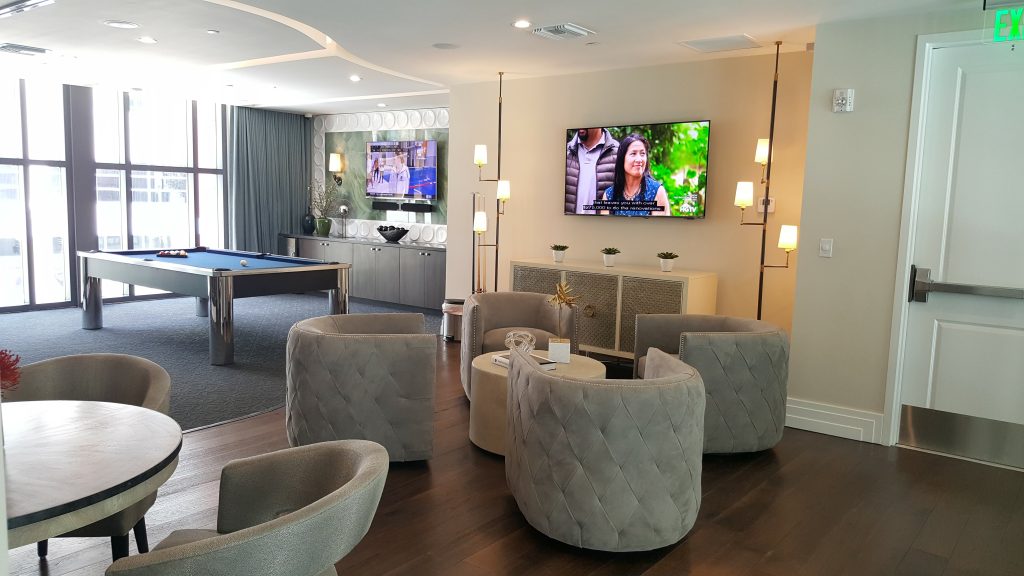
Your home should support how you actually live. For families who love entertaining, hosting game days, or simply enjoying music throughout the house, proper audio-video system design makes the difference between technology that enhances gatherings and equipment that complicates them.
Here are essential home audio design tips for creating systems that support social experiences and family life.
Understanding Your Entertainment Patterns
Before selecting equipment or planning layouts, consider how you entertain and use your home.
Do you host regular game day gatherings where multiple people watch sports together? Are dinner parties with background music common? Do kids’ activities require audio in play areas? Does your family enjoy whole-house music during weekend mornings?
These usage patterns determine appropriate system design. A home focused on large viewing parties needs different solutions than one emphasizing intimate dinner gatherings with background music.
We begin every home audio and home theater design by understanding these patterns, ensuring systems serve real needs rather than just demonstrating technical capabilities.
Multi-Room Audio for Flexible Entertainment
Home audio design tips consistently emphasize multi-room capabilities for homes focused on entertaining.
Multi-room audio means playing different music in different areas simultaneously. During parties, this allows background jazz in the dining room while the patio plays upbeat playlists. Family members control what plays in their spaces without affecting others.
Professional multi-room systems provide:
- Independent zone control letting each area select its own audio source
- Synchronized playback when you want the same music throughout the house
- Simple volume adjustment for each room independently
- Seamless transitions as you move between spaces
Integration with platforms like Control4 or Crestron means controlling all zones through unified interfaces rather than managing separate systems for each room.
Speaker Placement for Social Spaces
Speaker placement significantly impacts how well audio supports entertaining.
Living Areas and Great Rooms
For main gathering spaces, speaker placement should provide even coverage rather than creating “sweet spots” that only work from specific locations.
In-ceiling speakers work well for entertaining because they deliver sound from above, creating even distribution; remain invisible, maintaining clean aesthetics; and keep surfaces clear, allowing flexible furniture arrangement.
We often specify Sonance speakers for architectural integration. For larger spaces, multiple speaker locations ensure consistent coverage without dead zones or hot spots.
Outdoor Entertainment Areas
Patios, decks, and pool areas require weather-appropriate audio solutions. Outdoor speaker placement considers coverage area, volume distribution, weather resistance, and aesthetic integration. Outdoor audio should feel like a natural extension of indoor entertainment, controlled through the same interfaces.
Dining Areas
Dining spaces benefit from subtle audio supporting conversation rather than overwhelming it. In-ceiling speakers positioned appropriately provide pleasant background audio at conversational levels. The goal is ambiance, not performance listening.
Home Theater Design for Sports and Movie Nights
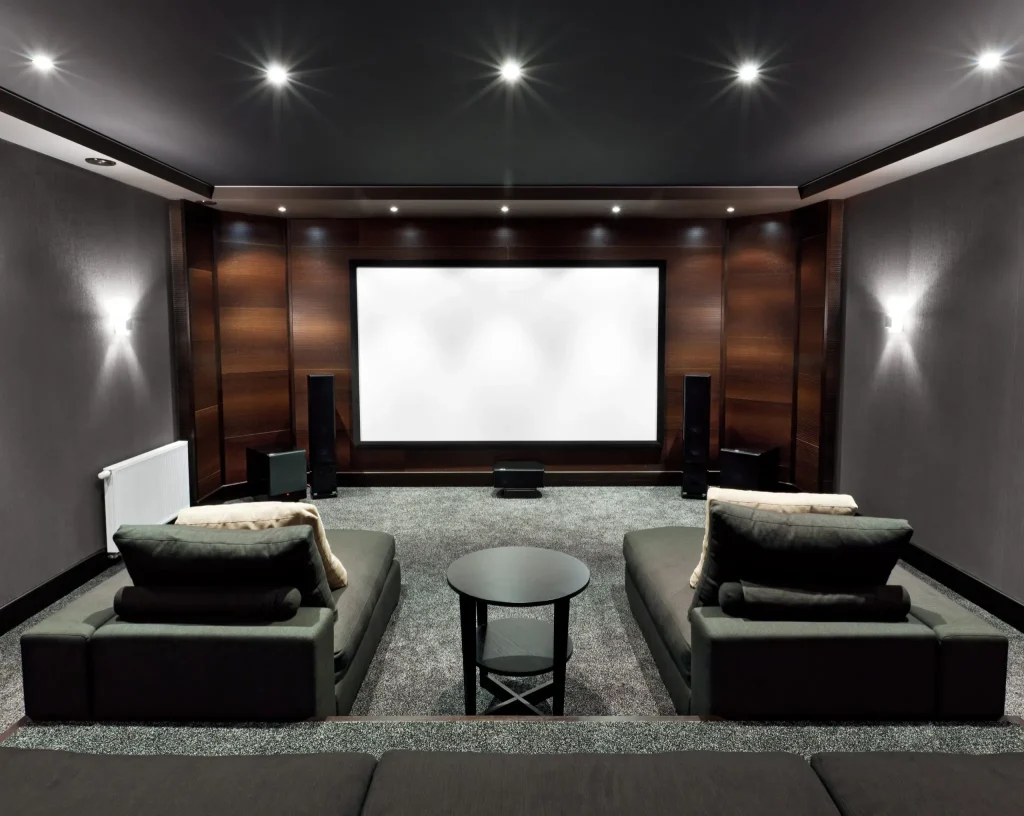
Dedicated viewing spaces need different design approaches than general entertaining areas. Screen or display placement should accommodate comfortable viewing for multiple people, considering viewing distance, seating layout, ambient light control, and furniture integration.
Theater audio for entertaining emphasizes immersive group experience rather than reference-quality sound. Clear dialogue ensures everyone understands commentary. Balanced surround creates an engaging experience without overwhelming viewers. Adequate volume fills the space without distortion at party levels.
Control Simplicity for Guests
Entertainment systems need simple control, allowing guests to operate audio without technical training. Complex systems create problems during gatherings.
Professional home automation integration simplifies control through labeled scenes like “Dinner Party” or “Game Day,” unified interfaces providing consistent operation, simple volume controls in each room, and visual feedback showing what’s playing where.
Layout Planning for Flow
Room layout affects how well audio supports entertaining. We plan speaker and control placement, considering how people actually move through and use spaces.
Modern open layouts connecting kitchens, dining areas, and living spaces need audio that transitions smoothly across connected spaces. Strategic speaker placement creates zones within larger spaces.
Control placement should align with natural movement patterns. We locate controls at entry points, seating areas, kitchen islands, and outdoor access points where people naturally pause or gather.
Acoustic Considerations Without Complexity
Basic considerations improve entertaining systems noticeably. Rooms with extensive hard surfaces reflect sound, creating echoes. Furniture, area rugs, and window treatments help absorb reflections. Long, narrow rooms need different speaker placement than square spaces. Systems should handle party volumes without distortion.
These fundamental considerations inform home audio design tips without requiring acoustic engineering expertise.
Integration with Video Sources
Modern entertainment involves various video sources: streaming services, cable/satellite, gaming systems, and more.
System design should make source selection simple regardless of what’s playing where. Switching from streaming to cable for sports shouldn’t require technical knowledge. Multiple people using different sources in different rooms should operate independently.
Professional integration through Control4 or Crestron platforms allows:
- Simple source selection showing available content clearly
- Room-specific operation where each zone accesses all sources independently
- Automatic configuration with system settings appropriate for video and audio settings per source
Planning for Your Lifestyle
At AudioTec Designs, we’ve designed entertainment systems for families and entertainers. Our design and engineering services start by understanding how you live and entertain.
We create systems supporting real usage rather than showcasing technical capabilities. Speaker placement, zone planning, and control design all serve practical goals: making technology enhance gatherings rather than complicate them.
Contact us to discuss designing audio-video systems for your entertaining and family lifestyle. We’ll explain how proper planning creates systems that actually work the way you live.
Frequently Asked Questions
How many zones do I need for multi-room audio?
Zone quantity depends on your home’s layout and how you entertain. Most homes benefit from treating main gathering areas, outdoor spaces, and bedrooms as separate zones. This typically means 4-8 zones for average homes, though larger properties or those with extensive entertaining spaces may need more. We assess your specific layout and usage patterns to recommend appropriate zone planning.
Can I add zones to my system later?
Yes, when properly designed initially. Professional systems accommodate expansion through adequate infrastructure and scalable equipment. We recommend planning conduit runs and network capacity beyond immediate needs, making future zone additions straightforward rather than requiring major renovation.
What about streaming services like Spotify?
Professional multi-room systems integrate with major streaming services, making them available as sources throughout your home. You select streaming content through the same interface controlling other audio sources, maintaining consistent operation regardless of content source.
Do I need a dedicated equipment room?
For multi-room systems, centralized equipment location simplifies installation and maintenance. This doesn’t require elaborate dedicated rooms. A closet, basement area, or garage space often works well. We design based on available space while ensuring adequate ventilation and service access.
How do I control audio during parties without looking antisocial?
Modern systems offer multiple control methods. Wall keypads in entertaining areas let you adjust without using phones or tablets. Pre-programmed scenes handle common scenarios with single commands. You shouldn’t need to disappear to manage technology during gatherings.